Washington Elite Stucco: Stucco Contractor in Washington, Utah - Installation & Repair

Washington Elite Stucco is a licensed and insured stucco contractor with 15 years of experience serving homes and commercial properties throughout Washington, UT. We install stucco on new construction, replace and re-stucco existing exteriors, and blend new finishes in remodels and additions. Our work also includes stucco repair and moisture remediation, resurfacing and recoating, stucco painting, block walls, decorative details, and interior plaster.

For stucco installation and replacement, we build the wall assembly as carefully as the visible finish. Our crews hang the metal lath that supports the plaster and install edge, corner, and other accessories in accordance with ASTM C1063, the industry standard for installing lath, furring, and related components beneath cement plaster.

We also install engineered one-coat systems according to the manufacturer’s ICC-ES Evaluation Report. ICC-ES, the International Code Council Evaluation Service, evaluates building products and systems and publishes reports that identify the approved materials, substrates, components, and installation requirements for a specific system. We also build traditional three-coat hard-coat stucco.

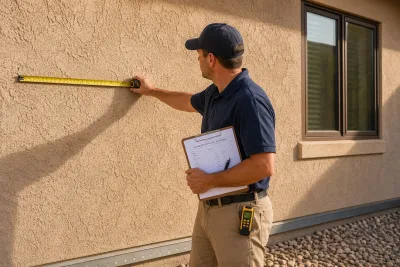
For stucco repair and remediation, we take moisture meter readings when damage may involve water, helping us identify damp areas and trace where moisture is entering before determining the repair scope. We match existing textures and finishes whenever possible. For recoating and refinishing, integral-color acrylic finishes provide consistent color throughout the finish coat, while UV-stable pigments help resist fading under southern Utah’s intense sun. We also schedule exterior plaster work around summer heat so fresh material has the time and moisture it needs to cure properly.

Our service area extends from Washington to St. George, Hurricane, and communities throughout Washington County. Every project begins with a written scope and ends with a texture and finish selected to blend with the surrounding walls. Call us today or use our quote form to request a free estimate.
Get A Free Estimate

Why Choose Washington Elite Stucco as Your Stucco Contractor in Washington, UT

  • Washington Elite Stucco brings 15 years in the trade, 1,000+ projects completed, all three stucco systems installed in-house, and free estimates on every job.
  • We are a licensed stucco contractor with general liability insurance and workers compensation coverage for crews working on your property.
  • We install all three stucco systems, so the assembly gets chosen to suit your building rather than to suit the one system a crew knows.
  • We match texture and integral color on stucco repairs, so a patch does not announce itself from the driveway.
  • Your written estimate names the system, coat count, finish, color, and the wall areas included before work begins.
  • We schedule plaster work around southern Utah heat and hold every coat to its full cure time, so summer jobs do not crack early.

Call (435) 319-6039 or use the quote form to request a free estimate.
Stucco Services for Southern Utah Homes and Businesses

Our stucco work runs from large commercial buildings to new homes and additions. It also covers exterior renewals and small, focused repairs. Each scope calls for a different wall assembly, finish, or matching skill, so we recommend the service that fits the building and its current condition.

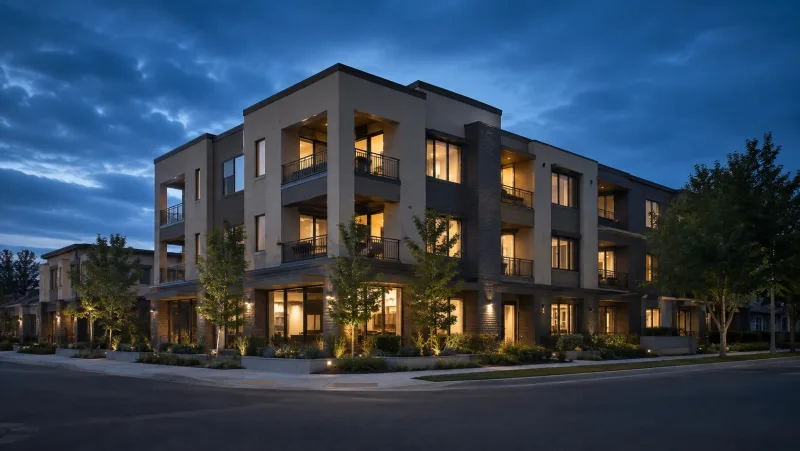
Commercial multifamily building with fresh stucco at dusk

Commercial Stucco Services

Storefronts, offices, and multifamily walls must handle tenant traffic, signage changes, and firm construction schedules. We plan commercial stucco around the project specification and property manager’s access rules. We detail the signage and HVAC penetrations, treating every fastener and sleeve as a way in for water. We set kickout flashing at every stepped roof-wall junction. We run a drainage EIFS assembly or a hard-coat system, whichever the project spec calls for. We take projects from 2,000 to 50,000 sq ft of wall. On each one we keep the entrances usable and put the noisy work outside business hours.

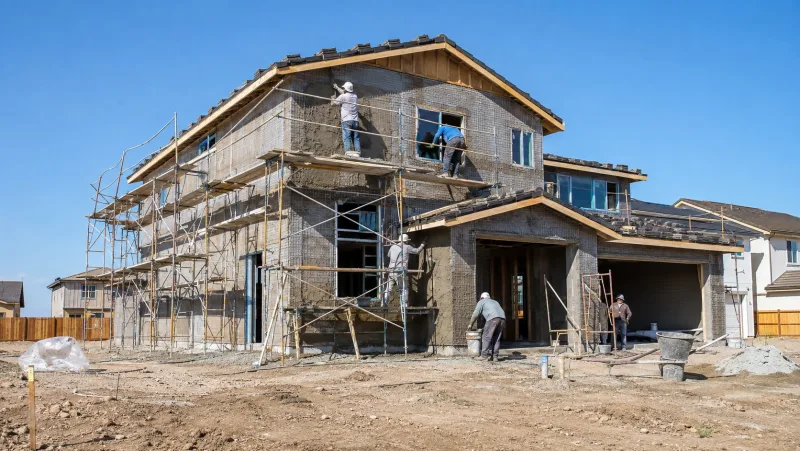
Crew applying stucco coats on a new construction home from scaffolding

New Construction Stucco

New construction stucco needs to stay on schedule and be ready for inspection at each stage. We overlap the water-resistive barrier so each layer sheds water onto the one below, then complete the lath and accessories before the required lath inspection. Our crews coordinate plaster timing with framing, windows, roofing, and trim so one trade does not hold up the next. We handle both subdivisions and custom homes, with a typical project taking about 2 to 3 weeks from dry-in, when the building is closed to the weather, to the finished stucco walls.

Technician taking a moisture meter reading on a stucco wall

Stucco Remediation

Stucco remediation addresses water damage behind the finish, not just what shows on the surface. We start with moisture-meter readings and use small probe openings when needed to confirm conditions inside the wall. Wood sheathing above about 19 percent moisture is wet enough to investigate before rot becomes more extensive. We trace the leak to its source, often failed window-head or kickout flashing, remove wet sheathing and damaged materials, correct the moisture entry point, and rebuild the stucco assembly before closing the wall again.

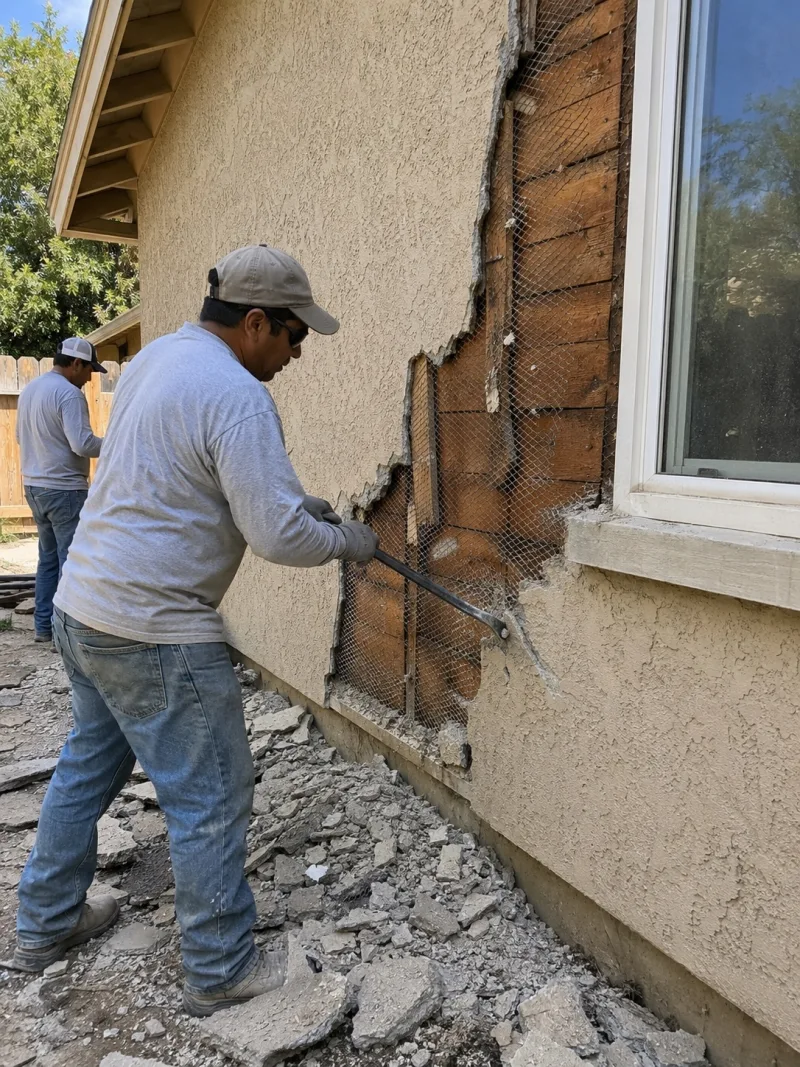
Old stucco pried off a wall exposing the lath beneath

Stucco Removal & Replacement

Widespread cracking, loose plaster, or assembly failure can make stucco replacement more practical than repeated patches. We tear the old stucco off down to the sheathing, so hidden damage comes into the open. We rebuild with a new barrier and new lath, then a three-coat system at a nominal 7/8 inch, the target thickness for three coats over lath. We haul the broken plaster, wire, and job waste off the property. A re-stucco also lets you choose a fresh texture and color for the whole house.

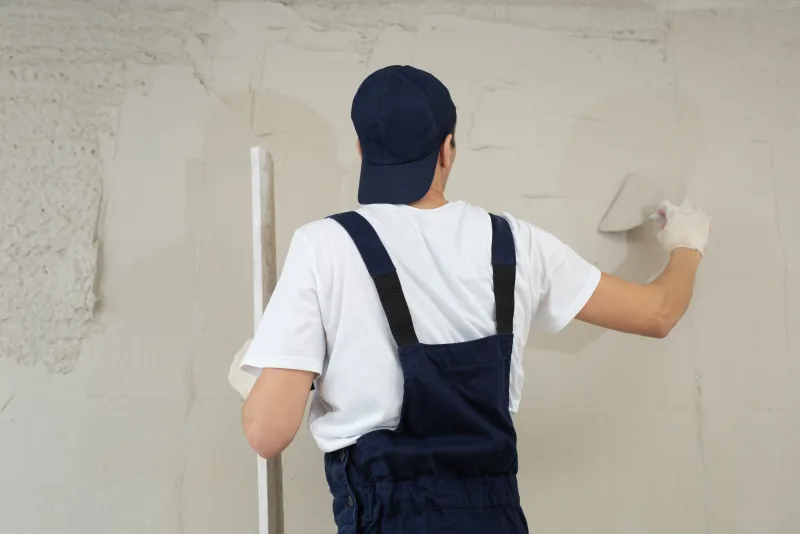
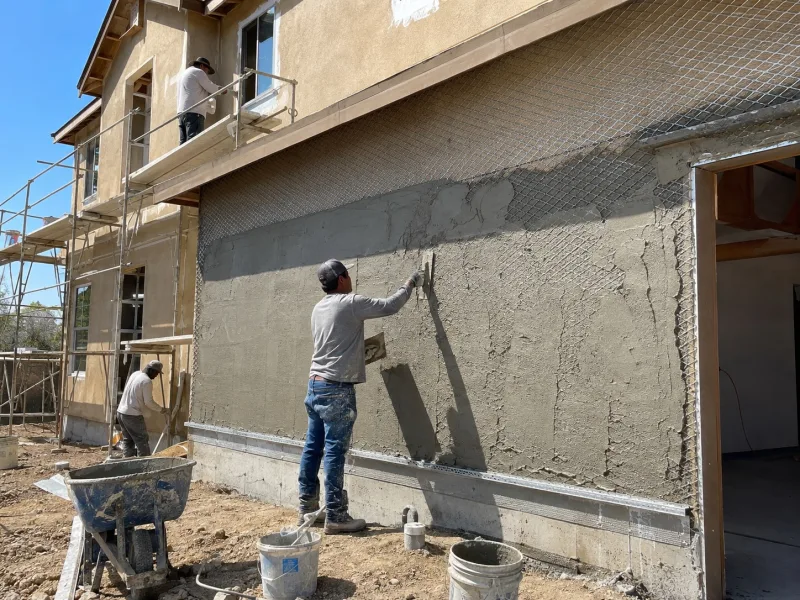
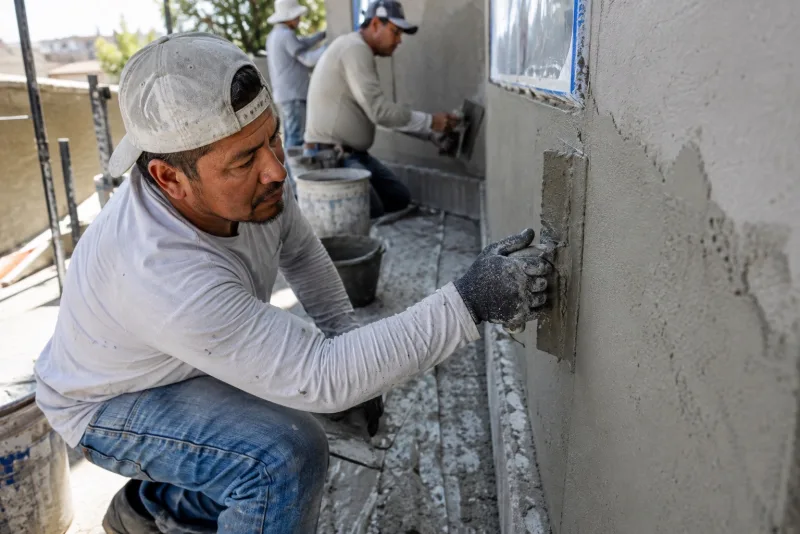
Plasterers troweling a fresh coat of stucco beside a window

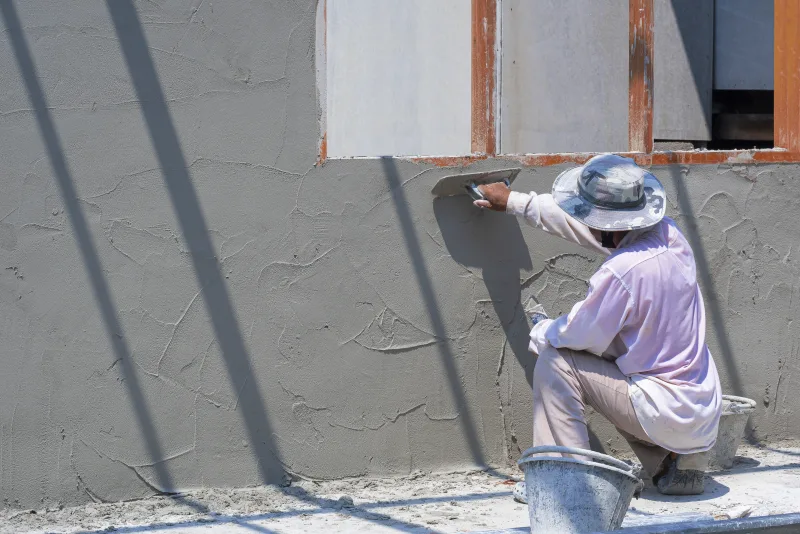
Stucco Installation

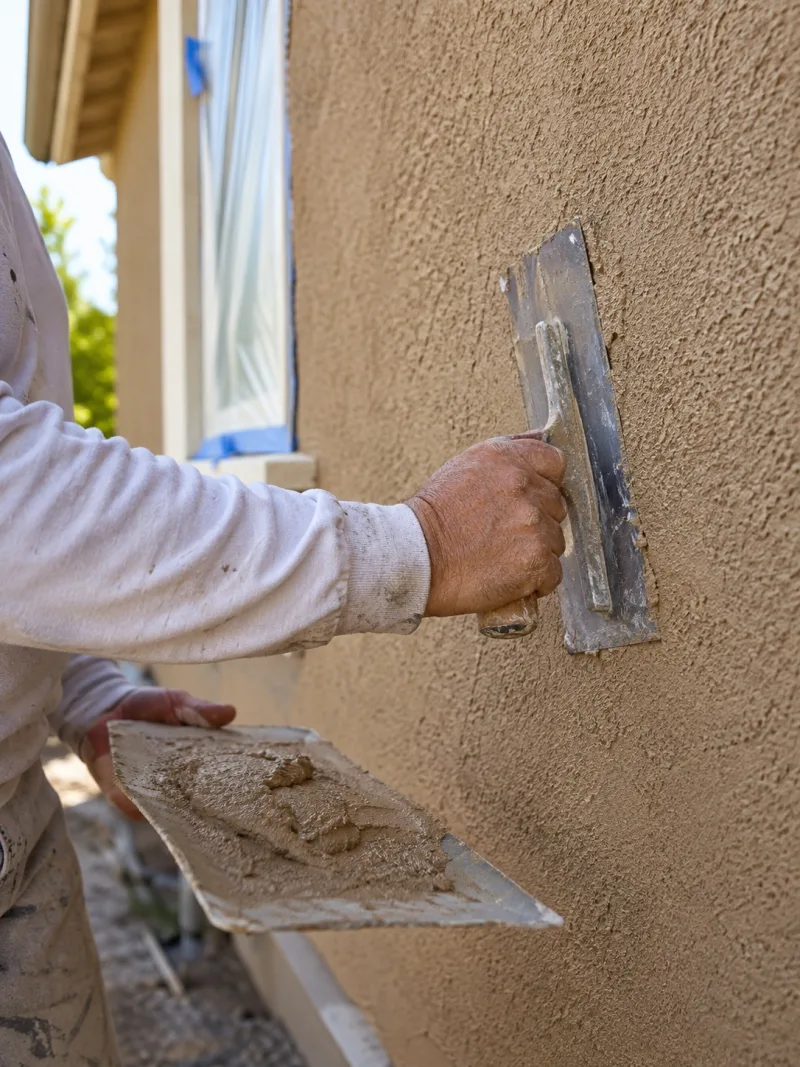
Stucco installation starts with checking the existing wall or substrate so we can choose the right system for the structure. We compare one-coat and three-coat assemblies based on the substrate, access, and planned finish, then install self-furring lath where required. The lath is overlapped by at least 1 inch, and casing bead is added at exposed edges for a clean termination. The finished stucco is then textured and colored to blend with the original building, whether we are covering an addition, a converted wall, or another new exterior surface.

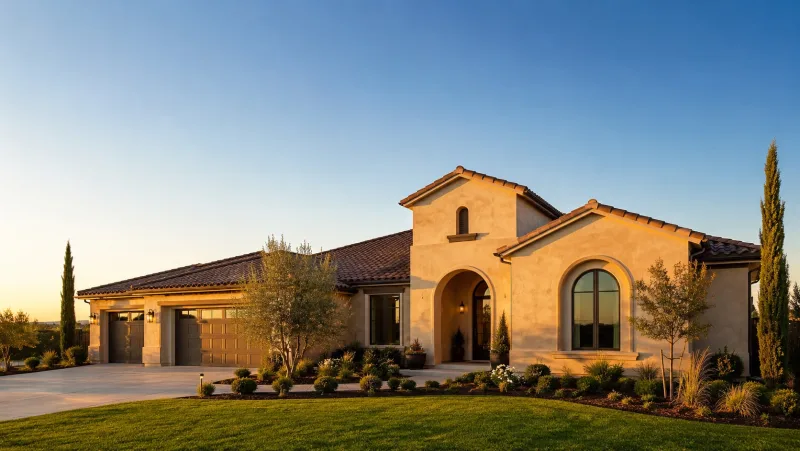
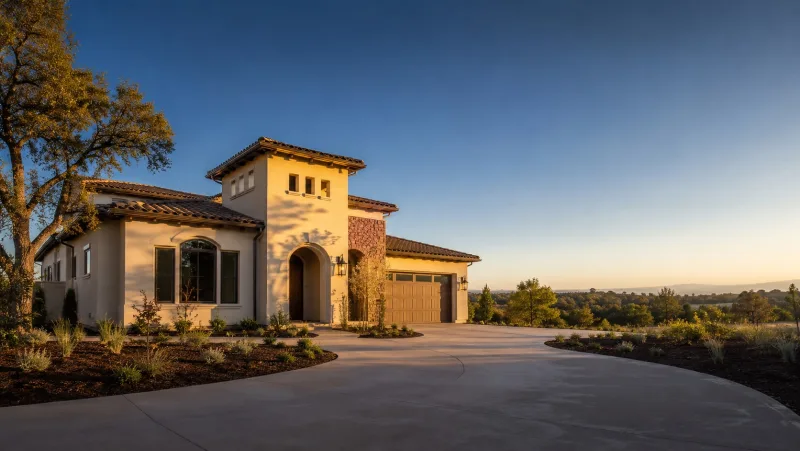
Stucco home with arched entry at golden hour

Residential Stucco Services

Residential stucco should fit the house, its architecture, and the surrounding street. We handle HOA color approval before ordering an integral color finish. The approved color then runs across the whole elevation, so every face of the house stays consistent. We match the texture to the neighborhood. We work on 1970s block houses and on new two-story builds in the growing Washington Fields area. Homeowners can choose a whole exterior, one complete wall, or phased work that follows a larger remodeling plan.

Plasterer feathering new stucco texture across the control joint where an addition meets the original wall

Stucco Remodeling & Additions

The seam where a new wall meets the old is where remodeling work shows, so we detail that junction first. We install an old-to-new control joint there, letting the addition and the original structure move independently. We feather the texture and match the color across the transition. We stucco additions from small bump-outs to second stories over 1,000 sq ft. Garages, room additions, and whole-house remodels end up with a continuous appearance, with the movement joints still doing their job.

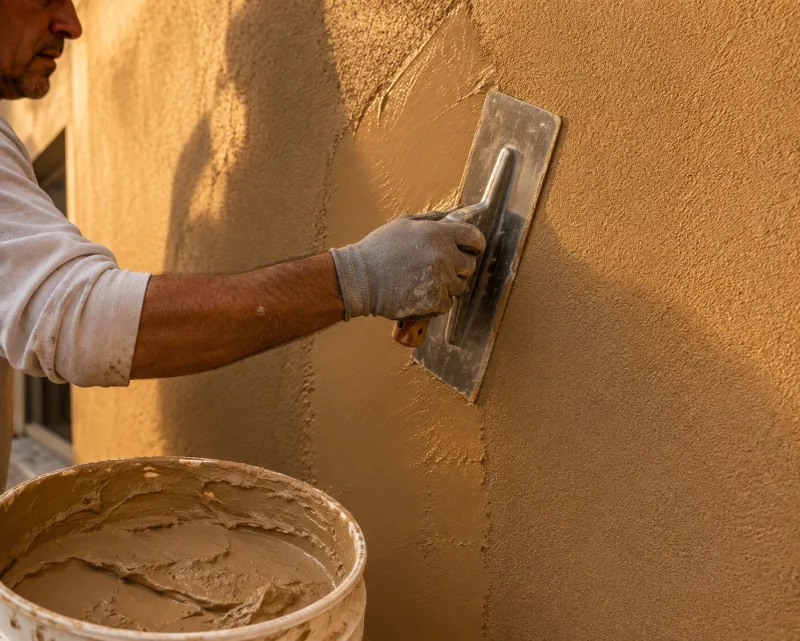
Hand troweling a new tan finish coat onto a wall

Stucco Resurfacing & Recoating

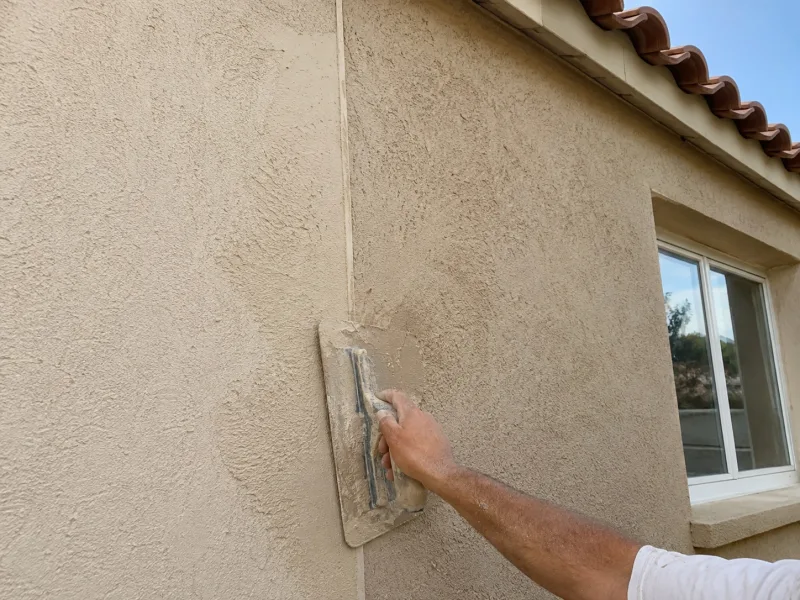
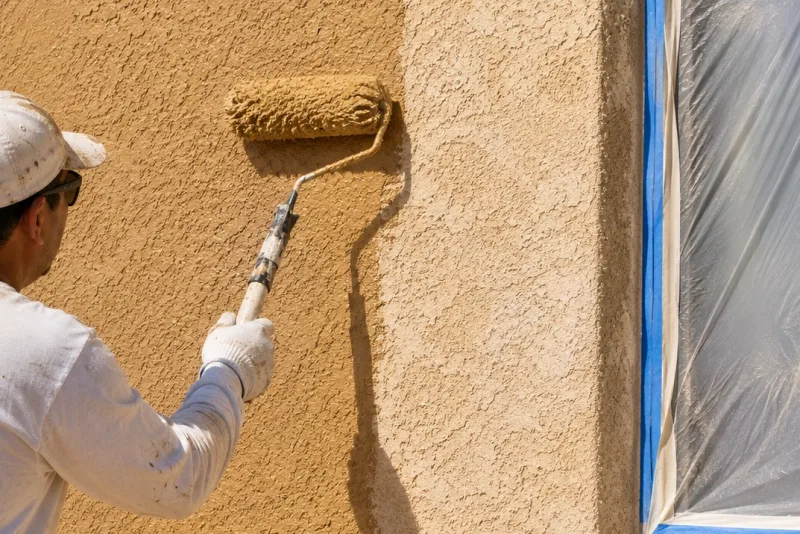
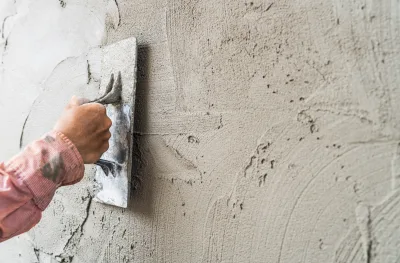
Resurfacing renews a structurally sound wall whose finish has faded, stained, or become dated. We pressure wash the wall first, taking off the chalk, dust, and weak residue that would stop a new coat from sticking. We apply a bonding agent before adding a leveling coat where old texture or waviness needs correction. The new finish coat goes on about 1/8 inch thick, in cement plaster or in an acrylic finish, depending on the texture and color you want. Recoating and refinishing update the exterior without the demolition required for replacement.

Stucco base coat and tan finish going onto a CMU block yard wall

Stucco for Block Walls

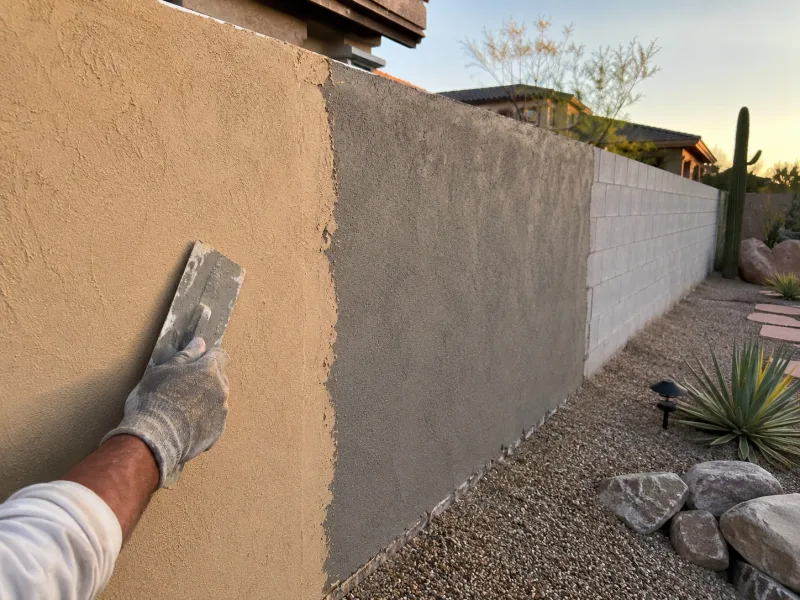
CMU block can support stucco directly, but dry masonry can pull moisture from fresh plaster too quickly. We dampen the block first to control that suction, and painted or slick surfaces receive a bonding agent so the new material can grip properly. On sound masonry, a two-coat direct-to-block system can often be applied without lath over the entire wall. We finish yard walls, garden enclosures, and block homes to match the main house or in a separate accent color.

What Stucco Siding Does for a Desert Home

Stucco siding suits southern Utah for practical reasons. It handles harsh sun, adds fire resistance, moderates indoor temperature swings, and offers a long service life with little routine upkeep. We can also shape its color and texture to the home’s architecture.

Durability and Fire Resistance

Noncombustible cement plaster forms a hard masonry skin that does not add fuel to a fire. In a hot, dry climate where fire resistance is part of how the building envelope is judged, that matters. The same hard skin shrugs off wind-driven grit, intense sun, and the occasional hail that chews softer siding. With routine crack and sealant maintenance, a hard-coat wall commonly lasts 50 years or more.

Thermal Mass and Indoor Comfort

Dense cement plaster has thermal mass. It absorbs heat through the day and gives it back after dark, which moderates the swing that southern Utah homes see between hot afternoons and cool nights. Indoors, that shows up as a steadier temperature.

A Low-Maintenance Exterior

Stucco does not need the routine staining or sealing that some exterior materials require. Upkeep comes down to a few habits. Watch for new cracks, and keep the sealant around windows, doors, and wall penetrations in good condition. Direct irrigation away from the walls, and keep soil and mulch clear of the weep screed at the base.

Colors, Textures, and Curb Appeal

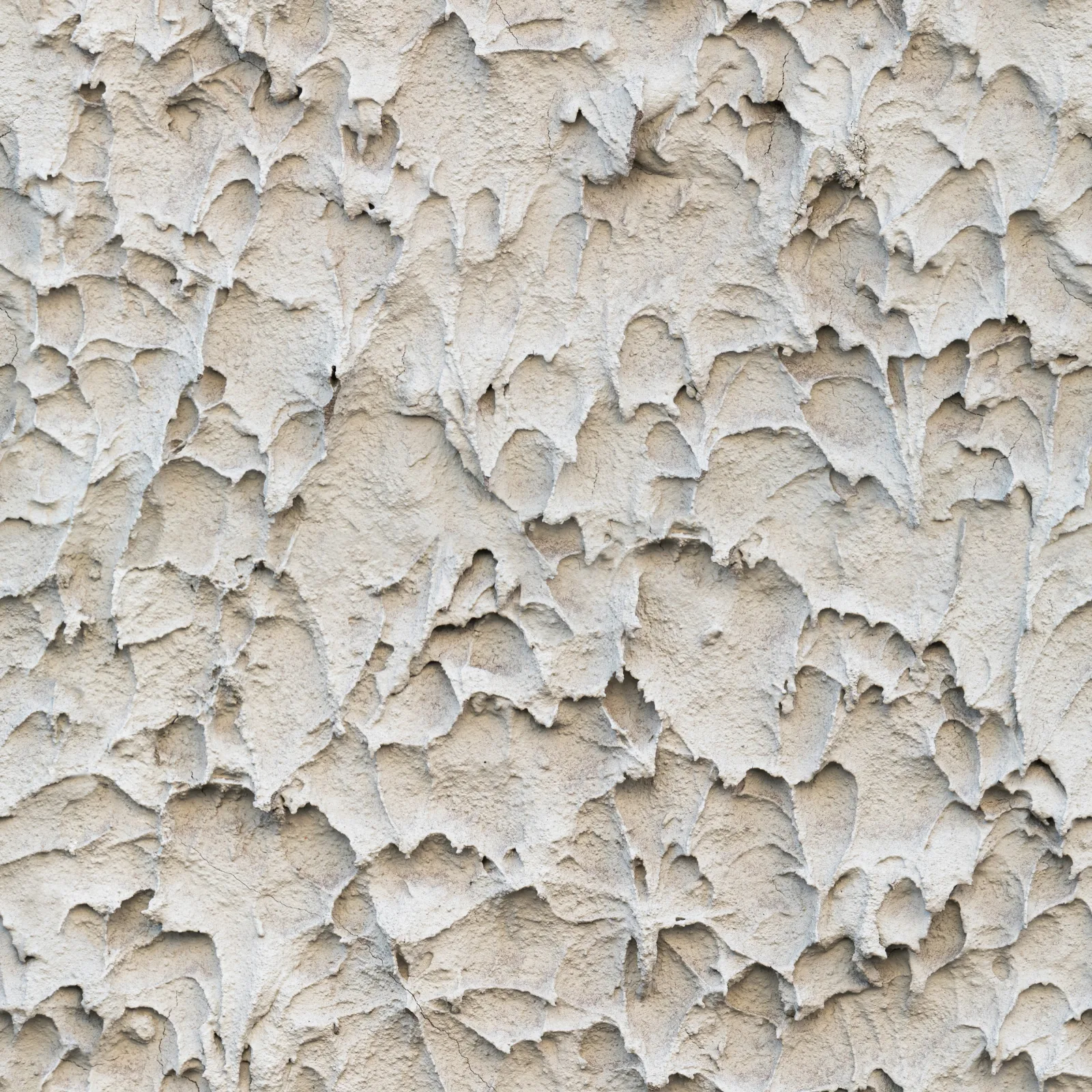
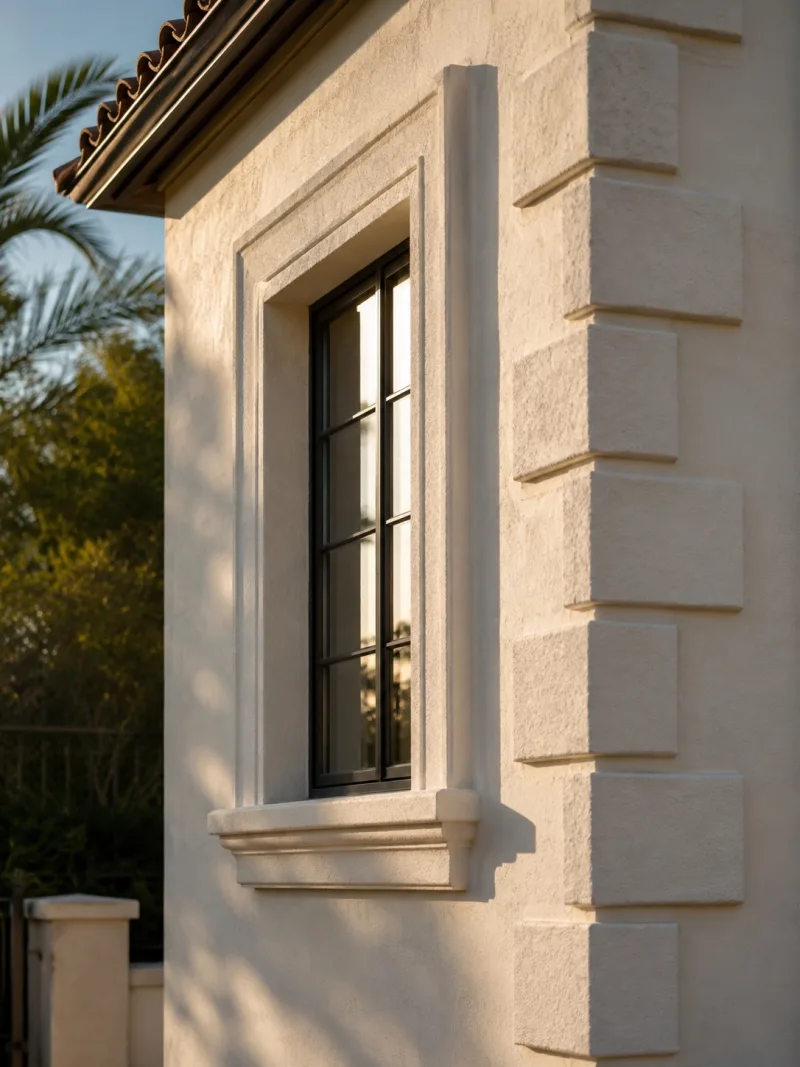
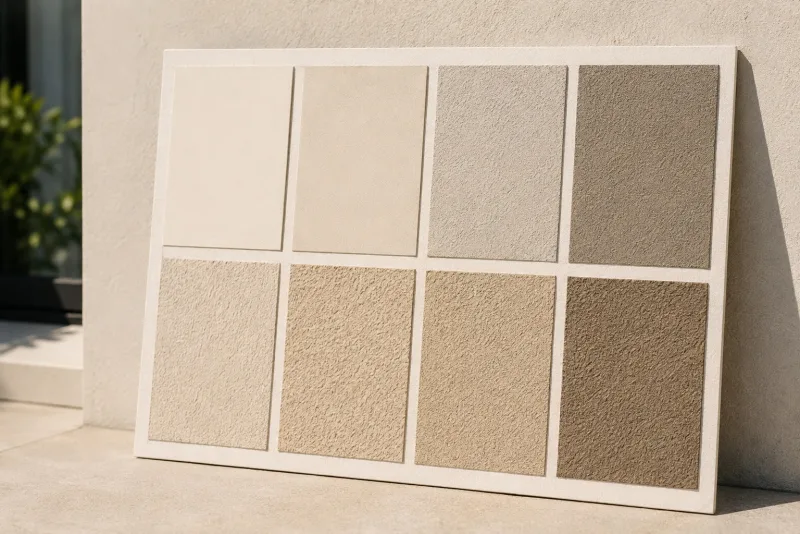
Stucco can be finished in smooth, sand, lace, knockdown, and other textures, in cement or acrylic finishes across a broad range of colors. Decorative bands, arches, and window trim can be built into the wall as well, which suits everything from Southwestern homes to cleaner contemporary designs. Integral color carries the shade through the coat instead of sitting on the surface, and colors and textures can be matched to the red-rock palette used across local subdivisions. That control lasts the life of the house. The finish can be matched to existing walls during an addition, refreshed once it fades, or changed entirely during a re-stucco. A clean, well-maintained stucco exterior keeps the whole house looking finished.

Stucco home with tower entry against a desert sunset

Stucco Systems and Finishes

Stucco terms are often used loosely, so it helps to separate the wall system from the material that gives it color and texture. One-coat stucco, three-coat stucco, and EIFS are wall systems. Acrylic and cement products are finishes. Smooth, sand, lace, and knockdown describe surface textures.

Worker floating an engineered base coat on an exterior wall

One-Coat Stucco

One-coat stucco uses an engineered, fiber-reinforced cement base coat instead of separate scratch and brown coats. A finish coat still goes over the base.

Approved systems can be installed over foam, wood, gypsum sheathing, or masonry, depending on the manufacturer. Foam sheathing can also add insulation beneath the stucco. We install each system according to its ICC-ES evaluation report, which identifies the approved materials and installation requirements.

Because the base goes on in fewer stages, one-coat stucco can shorten the construction schedule compared with a traditional three-coat system.

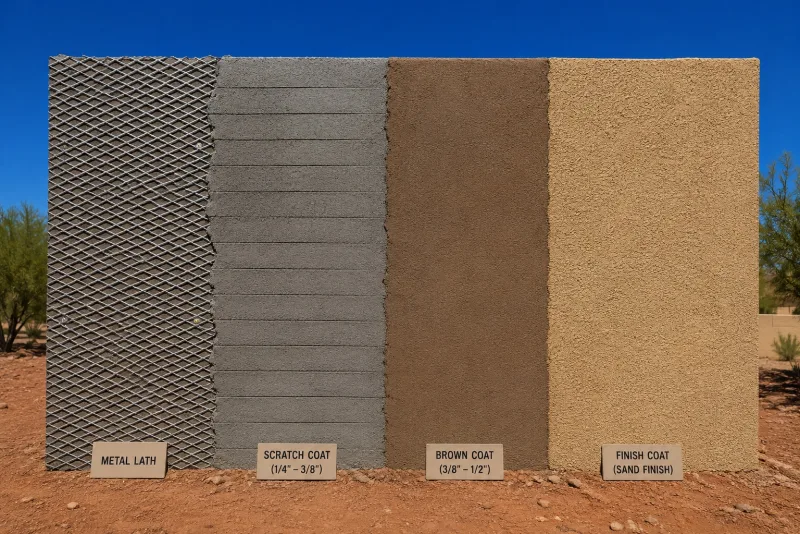
Demonstration wall showing metal lath, scratch coat, brown coat and sand finish coat side by side

Traditional Three-Coat Stucco

Traditional three-coat stucco is a hard-coat cement system made with a scratch coat, brown coat, and finish coat. Metal or wire lath supports the plaster on framed walls, and IRC R703.7.2 generally calls for three coats over that lath.

Three-coat stucco works well on custom homes, additions, commercial buildings, and older stucco walls. When an existing building already has a traditional cement system, matching that assembly helps new work move and weather more like the surrounding plaster.

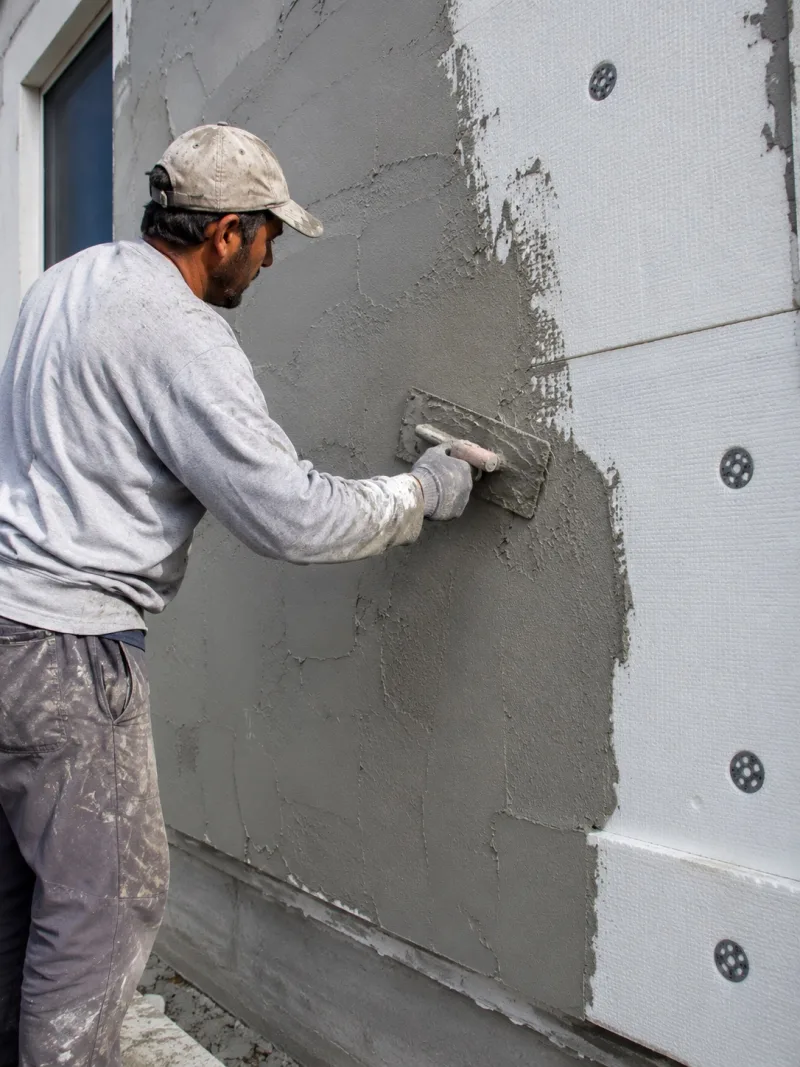
Base coat being troweled over foam insulation board

EIFS & Synthetic Stucco

EIFS is an insulated exterior cladding system made with a water-resistive barrier, insulation board, reinforced base coat, and acrylic finish. Residential EIFS uses drainage behind the insulation so incidental water can escape, as addressed by IRC R703.9.2.

EIFS is common on commercial and multifamily buildings, energy-efficient construction, architectural details, and repairs to existing EIFS.

The term synthetic stucco usually refers to EIFS. An acrylic finish by itself is not EIFS.

Brown coat going on over metal lath on a new stucco wall

What a Licensed Stucco Contractor Builds Behind the Plaster

A stucco wall is a drainage assembly, not just the plaster you see on the outside. Behind the finished surface are the layers and components that move water back out of the wall. Those hidden details have a major effect on how well the stucco performs over time, whether we are working on a house or a commercial building.

Moisture Detailing at the Base and Openings

We install a water-resistive barrier behind the lath and overlap each layer so water is directed downward instead of trapped in the wall. Think of this moisture barrier as the wall’s raincoat. If water gets past the plaster, the barrier carries it toward the bottom of the wall, where a weep screed gives it a place to drain out.

That drainage opening also needs to stay clear. Under the residential code enforced in Utah, IRC R703.7.2.1, the weep screed must sit at least 4 inches above bare earth or at least 2 inches above a paved surface.

We also pay close attention to openings and roof-to-wall intersections. Kickout flashing directs roof runoff away from the stucco where a roof meets a wall, while head flashing carries water over the top of windows. Most of the stucco repairs we make in Washington County can be traced back to problems at a roof-wall joint or window head, which is why we treat those areas as critical parts of the wall assembly.

Lath and Accessories Set to ASTM C1063

On framed walls, metal lath provides the support that cement plaster needs. We install it to ASTM C1063, the standard that governs how lath and furring are attached for cement plaster.

Self-furring lath is designed to stand slightly away from the wall. That space allows wet plaster to push through the mesh and lock behind it as it hardens. Paper-backed lath combines the metal mesh with water-resistive paper bonded to the back, providing both plaster reinforcement and part of the wall’s moisture-management system.

We fasten the lath with corrosion-resistant fasteners so the attachment points do not rust out behind the finished plaster. Around openings, penetrations, and exposed edges, casing beads give the stucco a clean, controlled stopping point.

Once the finish is applied, most of these components disappear from view. But plaster is only as sound as the lath and detailing underneath it, which is why we treat the hidden parts of the wall with the same care as the finished surface.

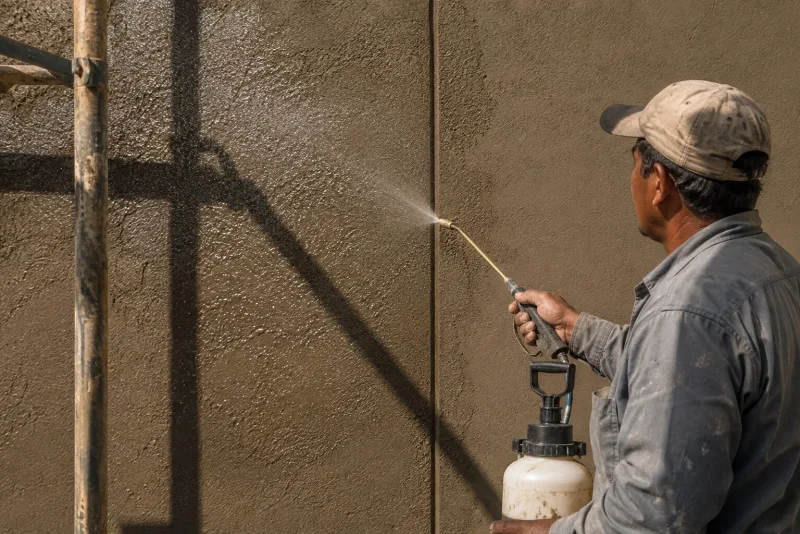
Worker misting a freshly plastered wall with water to keep it curing in desert heat

Curing and Crack Control in Southern Utah Heat

Fresh cement plaster needs enough moisture and time to harden properly. In Washington’s heat, low humidity and desert winds can pull water out of new stucco too quickly. That can weaken the plaster and increase the chance of cracking, so we adjust the work around the weather instead of treating hot, dry conditions like a normal day.

Control joints and expansion joints also play an important role. They give large wall areas planned places to absorb movement instead of allowing cracks to form randomly across the stucco.

Curing Cement Plaster in Desert Conditions

Before applying fresh plaster, we dampen the substrate so it does not immediately pull moisture out of the new coat. After application, moist curing keeps the plaster damp long enough for the cement to hydrate and develop strength.

IRC R703.7.5 sets minimum waiting periods between coats. In a traditional three-coat system, the brown coat, which is the second plaster layer, goes on no sooner than 48 hours after the scratch coat. The finish coat then waits a full seven days after the brown coat. The code also requires each coat to remain moist for at least 48 hours before the next coat is applied.

We treat those times as minimums. If intense heat, wind or low humidity is drying the surface too quickly, we extend the curing period rather than rushing the next coat. During 100°F-plus summer weather, we also schedule plaster work to avoid the harshest afternoon sun. Drying wind and very low humidity are treated much like other bad weather because both can interfere with proper curing.

Control Joints That Absorb Movement

A control joint is a planned break in the plaster surface. The section of wall between two control joints is called a panel. These joints divide larger wall areas into manageable sections so normal building and temperature movement is less likely to produce uncontrolled cracking.

We size those panels to the limits in ASTM C1063. A panel is generally limited to about 144 square feet, with no side longer than 18 feet and no panel more than two and a half times as long as it is wide.

We also plan control joints around openings, floor lines and transitions between old and new construction, where movement is more likely to concentrate. If the building already has a structural movement joint, an expansion joint continues through the stucco at that location so the plaster can move with the structure instead of bridging across the joint.

Southern Utah’s day-to-night temperature changes make exterior walls expand and contract on a regular basis. Properly placed control and expansion joints give that movement a planned place to occur, helping keep it from showing up as random cracks across the finished wall.

Stucco Cost Factors in Washington County

Stucco cost depends on exterior wall area, the selected system, and the condition of the existing surface. We measure the wall faces, openings, corners, and gables before we price a job.

  • The base price covers materials, labor, tear-off and disposal, plus scaffold access for tall or obstructed walls.
  • Published national guides place full removal and replacement at $8–21 per sq ft of wall. Building shape and architectural detail move a job within that range.
  • Repair work is priced by the area that has to come out, commonly $8–50 per sq ft. Most repair jobs land around $600–2,650, with the average near $1,630.
  • System choice moves the price. Three-coat, one-coat, and EIFS assemblies need different materials and different labor.
  • Wall condition sets the prep. Damaged sheathing, failed lath, and heavy surface prep all add to the scope.
  • Wall height and tight access add setup time and scaffold. A cement finish and an acrylic finish also differ in material price and color options.
Written stucco estimate on a clipboard

From First Call to Finished Walls: How Our Process Works

Washington Elite Stucco keeps a job predictable from the first phone call onward. You know what happens next, and you know the price before any work starts. The same is true on a one-wall repair and on a full re-stucco.

  1. 1.

    Reach Out

    Call (435) 319-6039 or fill out the quote form. Tell us if you need a repair, a re-stucco, or new installation.

  2. 2.

    Free On-Site Estimate

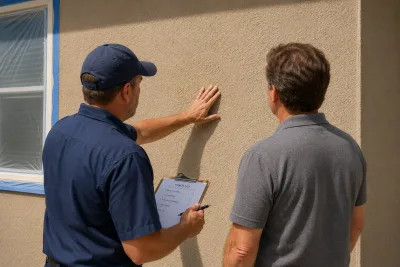
    We inspect the walls and take moisture readings where damage suggests a leak. Your written scope arrives within 24 to 48 hours of the visit.

  3. 3.

    Pick System, Finish, and Color

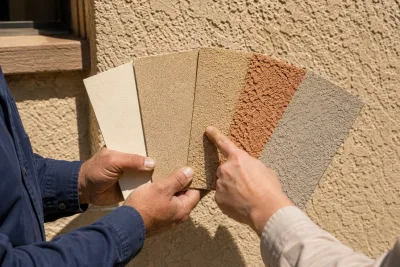
    We explain the recommended system and show you texture and color samples. Once you approve the selections, we set the work date.

  4. 4.

    The Work

    Our crew protects windows, roof edges, and landscaping before work starts. We put the coats on in order, give each one the time it needs to set, and clean the site each day.

  5. 5.

    Daylight Walkthrough

    We review the finished walls with you in natural daylight, where texture and color differences show clearly. We fix anything on the punch list, the short list of touch-ups from that walkthrough, before we leave.

Ready to talk about your walls?

Call for a free on-site estimate, or request one through our form.

Call Now: (435) 319-6039
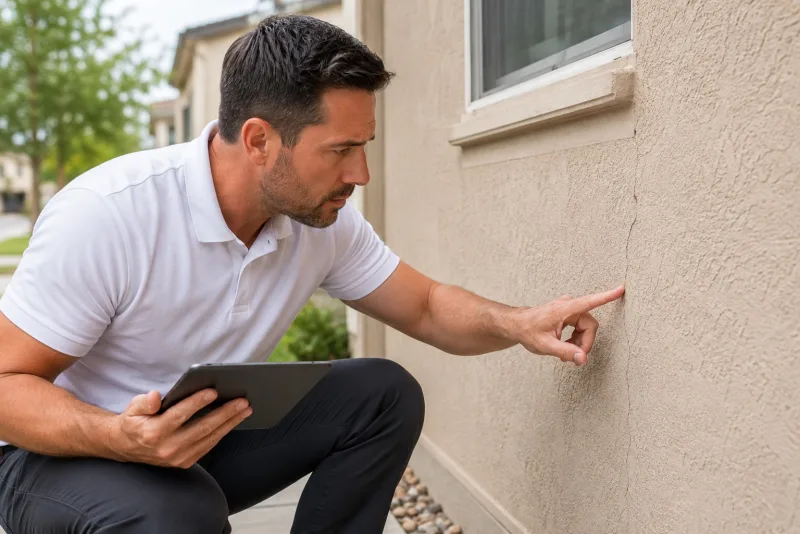
Weathered stucco wall with cracks and staining

Warning Signs of Stucco Damage

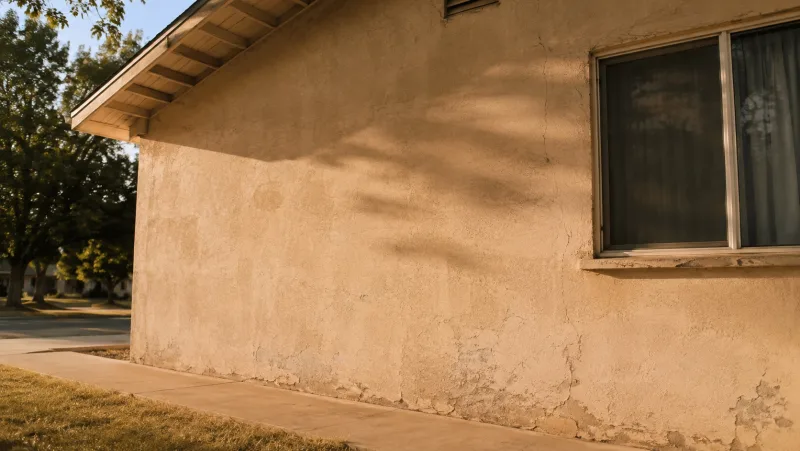
Stucco damage usually leaves visible or audible warning signs before a larger section fails. Check changes in crack width, color, and shape, especially around windows and other wall openings.

Cracks That Mean Movement

Fine hairline cracks and crazing, the web of shallow surface cracks, are common cosmetic changes. A crack wider than about 1/16 inch is worth a closer look, especially if it keeps growing or comes back after a patch. A stair-step cracking pattern near a window corner can point to wall movement. Dark staining beside a crack means water is already getting in through it.

Water and Sun Symptoms

A bulge, or a hollow sound when you tap the wall, means the stucco has let go of its base. The trade calls it delamination. Rust streaks can signal corroding lath. Efflorescence is the white mineral residue left as water passes through the wall. Fading shows up as chalky color that will not rinse away, and a wall at that point is a candidate for refinishing rather than repair.

Simple Stucco Maintenance That Prevents Bigger Repairs

Routine stucco maintenance takes little time and can spare you from larger repair bills. A clean wall, open drainage points, and sound sealant protect the finish from avoidable wear.

A Once-a-Year Walk-Around

Walk the outside of the house once a year. Check the corners, the window heads, the wall penetrations, and the base. Note new cracks, stains, or caulk pulling away from a joint. Sealant at joints and penetrations usually lasts about 5 to 10 years, so recaulk on that cycle before weather opens the gaps.

Keep Water and Soil Off the Wall

Direct sprinklers away from the house. Hard-water overspray leaves mineral staining and drives salts into the finish. Keep soil, mulch, and hardscape from creeping up over the weep screed at the base. Rinse dust off with gentle water pressure, and skip high-pressure washing between refinishes.

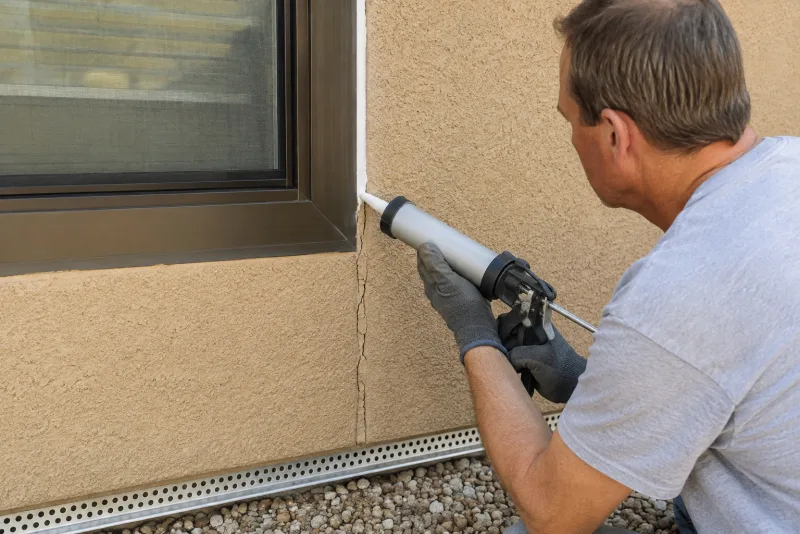
Homeowner running a fresh bead of sealant along the joint where a stucco wall meets a window

About Washington, Utah: Cotton Mission Town in Utah’s Dixie

Washington began in 1857 as an LDS cotton mission, when 28 families led by Robert Dockery Covington arrived to raise the crop. The cotton fields helped give Utah’s Dixie its name, and the historic cotton mill still stands. In Old Town, the Washington School museum and Elephant Arch mark the community’s earlier center. Crimson Cliffs High School sits on the newer side of town. Washington counted 27,993 residents in 2020, and it is now one of the fastest-growing parts of the St. George metropolitan area.

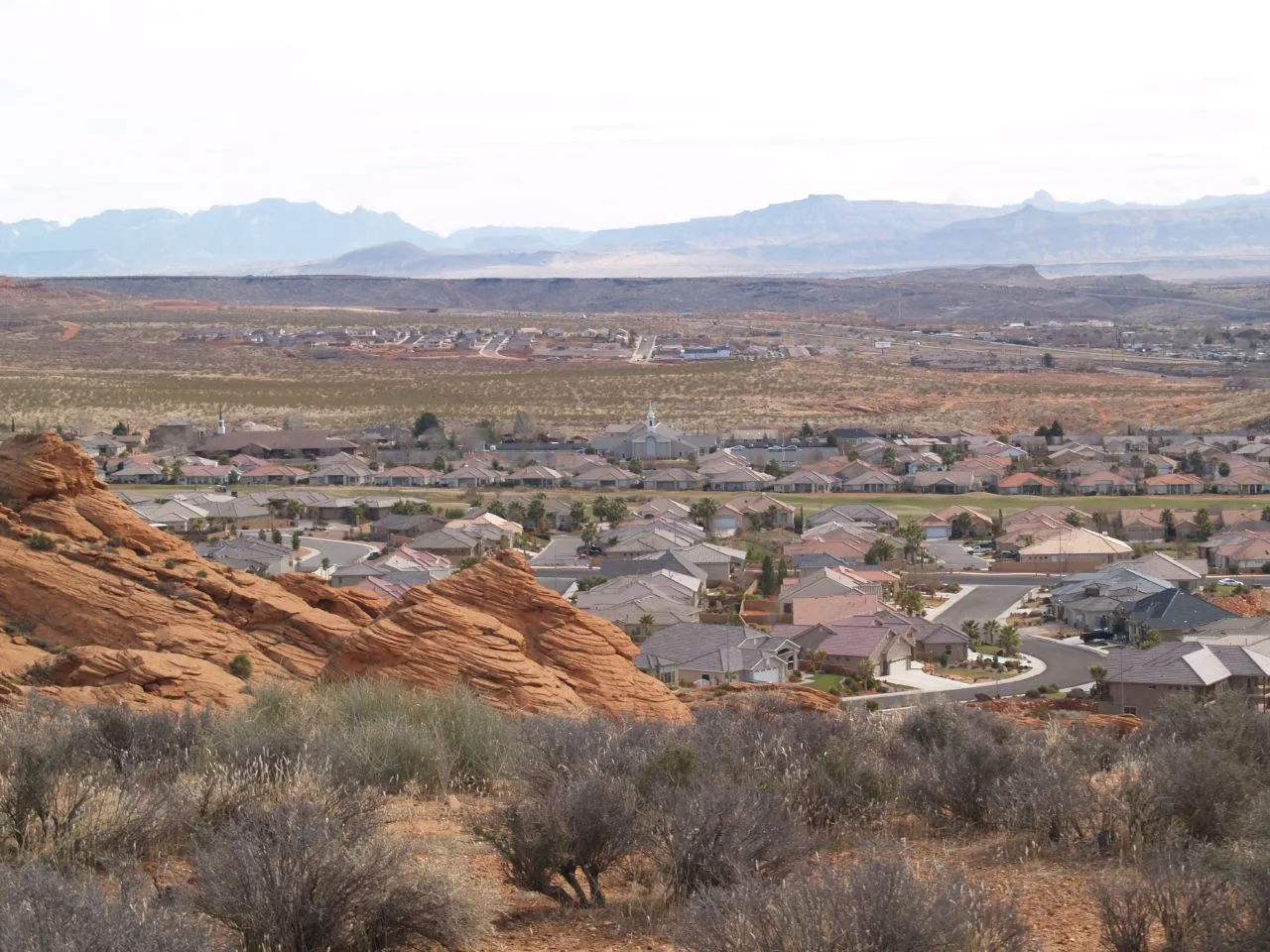
Red rock formations frame Washington, Utah, at 2,894 ft elevation on the Mojave Desert edge. The desert climate brings intense heat and long hours of direct sun, which fade color and age joint sealants, so recoating and refinishing work stays steady here. New subdivisions in Washington Fields and Green Springs keep new-construction stucco moving, while the older walls in Old Town need repair. A stucco company working across Washington County must understand both sides of the city.

Areas We Serve

Washington Elite Stucco serves Washington and the communities around it as a local stucco contractor. Our service area reaches established neighborhoods, growing subdivisions, and smaller towns throughout the county. Give us the property address and we will confirm the job sits inside our normal coverage.

  • Washington, UT
  • St. George, UT
  • Hurricane, UT
  • La Verkin, UT
  • Toquerville, UT
  • Leeds, UT
  • Santa Clara, UT
  • Ivins, UT
  • Virgin, UT
  • Apple Valley, UT
  • Rockville, UT
  • Springdale, UT
  • New Harmony, UT

Neighborhoods We Serve in Washington

Inside the city we work across Old Town and the newer subdivisions on both sides of the interstate.

  • Washington Fields
  • Coral Canyon
  • Green Spring
  • Sienna Hills
  • Stucki Farms
  • Sunrise Valley
  • Long Valley
  • Brio
  • Franklin Fields
  • Brookhaven Fields
  • Chaparral Heights
  • Chaparral Ridge
  • Roadrunner Ridge
  • Majestic Heights
  • Old Town Washington

What Customers Say About Working With Us

Our customers include homeowners, builders, property managers, and HOA boards.

Stucco Questions We Hear Most

What is the average cost for stucco repair?

Repair price follows the area that has to come out, how far the damage runs behind the surface, and whether the texture and color have to be matched into a weathered wall. The cost section above breaks those factors down. Most patch repairs are a one-day visit for the crew, though the patch itself keeps curing after we leave and the finish coat is scheduled around that. We provide a free written estimate.
Can a handyman do stucco?

A handyman can handle a shallow cosmetic patch. Work involving lath, flashing, or coat timing needs a licensed and insured stucco contractor because a failed repair can trap and conceal water.

Will insurance pay for stucco repair?

Homeowners insurance often covers sudden stucco damage from a storm or impact, subject to your policy. Gradual wear and slow leaks are commonly excluded. We photograph the damage and document its likely cause.

When should I worry about stucco cracks?

Hairline crazing can be normal. Schedule an inspection when a crack reaches about 1/16 inch, follows a stair-step pattern, carries staining, or opens again in the same spot after repair.

How much does it cost to stucco a 1500 square foot house?

Contractors price stucco by exterior wall area, which is a different number from the floor plan. Wall height, gables, and the number of windows and doors all move that figure, so two 1,500 square foot houses can carry very different wall areas. We measure the actual faces and quote free.

Can stucco be repaired if it cracks?

Yes. Nearly all cracked stucco can be repaired, and texture matching helps the new finish blend with the existing color. Skip DIY caulk beads; they leave visible ridges and interfere with a proper crack repair.

Do you handle commercial buildings and new construction?

Yes. As a local stucco company, we perform commercial stucco, new construction stucco for builders, and residential work. One licensed crew follows one written scope across all three project types.

Get a Free Stucco Estimate in Washington, UT

Washington Elite Stucco serves homes and commercial properties across Washington and Washington County. Request a free on-site estimate by calling (435) 319-6039 or using our quote form. We will look at the project, answer your questions, and follow up with a written scope before any work begins. The estimate is free whether the job is one cracked wall or a whole building.